

The Effect of Apple (Malus sylvestris Mill) as a Natural Ingredient to Prevent Hair Loss
Identifier: 259
Study Type: Review Article (2019)
---
## Abstract
This review discusses the potential of apple (Malus sylvestris Mill) as a natural ingredient for preventing hair loss. Hair loss is influenced by systemic, hormonal, nutritional, genetic, and environmental factors. Apple fruit contains polyphenols—especially procyanidin B‑2—which have demonstrated the ability to stimulate hair follicle growth, promote the transition from telogen to anagen, and protect follicles from damage. Apple extract formulated as a tonic or cream has shown the ability to accelerate hair growth in experimental models.
---
## Key Findings
### 1. Hair Loss Background
- Hair loss (alopecia) affects both men and women and significantly impacts psychological well‑being.
- Causes include systemic disease, hormonal imbalance, nutritional deficiencies, intoxication, genetic factors, environmental stressors, and cosmetic treatments.
- Nutritional deficiencies—especially amino acids, fatty acids, vitamins, and minerals—are strongly associated with hair thinning.
### 2. Apple as a Functional Ingredient
- Apples contain high levels of polyphenols, particularly in the peel, including quercetin, catechin, phloridzin, and chlorogenic acid.
- Apple polyphenols exhibit antioxidant, antiproliferative, anti-inflammatory, and skin‑protective effects.
- “Apples contain procyanin B‑2 naturally found in apples… proven to accelerate hair growth.”
- Procyanidin B‑2 concentration in apple flesh is approximately **9.35 mg per 100 g fresh weight**.
### 3. Mechanisms Supporting Hair Growth
- **Procyanidin B‑2** stimulates hair follicle cells and promotes the shift from telogen (resting) to anagen (growth).
- It reduces Protein Kinase C (PKC‑α, PKC‑βI, PKC‑βII, PKC‑η) activity, preventing inhibition of anagen‑phase growth.
- Apple polyphenols protect follicles from chemotherapy‑induced dystrophy by shifting metabolism toward mitochondrial β‑oxidation and reducing pentose phosphate pathway activity.
- Apple extract increases prostaglandin levels associated with hair growth stimulation.
### 4. Evidence From Studies
- **Animal studies:** Apple peel extract tonic increased hair length in mice, with treated groups showing a 5.24 cm difference compared to controls.
- **In vitro studies:** Apple polyphenols increased keratin production and improved follicle viability.
- **Clinical trial:** A nutraceutical formulation derived from apple polyphenols improved hair density, keratin content, and growth rate in human subjects.
### 5. Limitations
- Limited number of studies; dosing and duration vary widely.
- Some clinical trials did not evaluate adherence or compare intent‑to‑treat vs. per‑protocol outcomes.
- Capsule‑based delivery limits classification as a functional food.
---
## Mechanisms of Action
### Antioxidant Protection
Apple polyphenols neutralize free radicals, reduce oxidative stress in follicles, and protect against UV and environmental damage.
### Follicle Growth Stimulation
Procyanidin B‑2 enhances follicular cell proliferation and promotes anagen entry.
### PKC Pathway Modulation
Inhibition of PKC isoenzymes removes a key block on anagen‑phase hair growth.
### Mitochondrial Support
Apple extract shifts energy metabolism toward β‑oxidation, improving follicle resilience.
### Anti‑Inflammatory Effects
Polyphenols reduce inflammatory signaling that contributes to follicle miniaturization.
---
## Relevance to Apple Poly Products
### Poly‑GRO
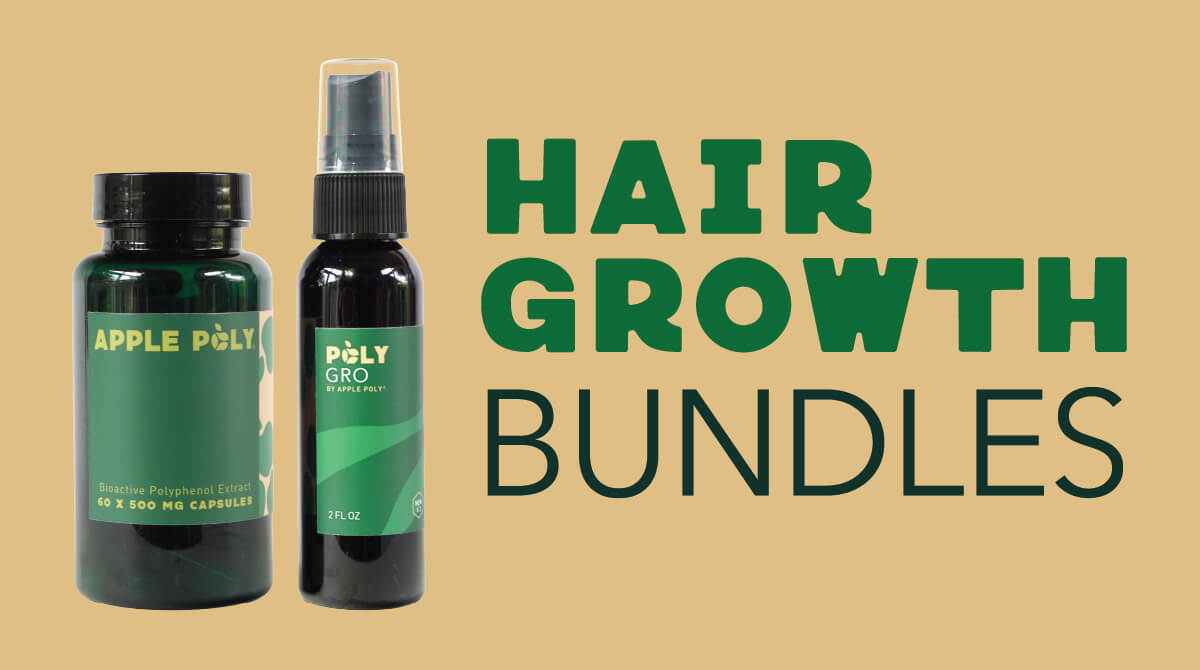
This review highlights several mechanisms—antioxidant protection, PKC pathway modulation, and support for anagen‑phase entry—that align with Poly‑GRO’s design. The study notes that apple‑derived polyphenols help protect follicles from oxidative stress and environmental damage, which parallels Poly‑GRO’s focus on scalp health, cellular resilience, and follicle support.
### Apple Poly
Apple Poly contains concentrated apple‑derived polyphenols, including the same class of compounds discussed in this review. The paper emphasizes the role of procyanidin B‑2 in stimulating follicle cell activity, promoting the telogen‑to‑anagen transition, and supporting keratin‑related processes. These mechanisms directly correspond to the polyphenol‑driven pathways supported by Apple Poly.
### Hair Growth Bundle
The Hair Growth Bundle combines the polyphenol density of Apple Poly with the follicle‑supportive and scalp‑health components of Poly‑GRO. This mirrors the multi‑pathway approach described in the review: antioxidant activity, PKC modulation, mitochondrial β‑oxidation support, improved follicle metabolism, and structural protein support. Together, the products in the bundle address the same categories of follicle protection and growth‑phase support highlighted in the study.
---
## Conclusion
Apple extract—particularly its procyanidin B‑2 content—shows promising potential as a natural agent for preventing hair loss. Evidence from in vitro, in vivo, and clinical studies demonstrates improved follicle growth, increased keratin expression, and enhanced anagen‑phase activity. While more standardized research is needed, apple-derived polyphenols represent a safe, functional, and biologically active option for supporting hair growth.
---
## Reference
Habsari CR, Graharti R, Sari MI, Yulisna. The Effect of Apple (Malus sylvestris Mill) as a Natural Ingredient to Prevent Hair Loss. Medula. 2019;9(2):205–211. Identifier: 259